

How to Choose a Recreational Kayak

Updated: Jun 4
A practical guide for Seattle paddlers — lakes, calm bays, and everything in between

A lot of first-time buyers start by looking for something stable, easy to get in and out of, and light enough to load themselves. They’re thinking about Lake Union on a weekday morning, or Green Lake, or maybe Puget Sound on a calm summer day. They need a boat that makes paddling feel accessible — not something to grow into.
That’s what a recreational kayak does. This guide covers how to choose one — and how to figure out whether a recreational model is the right fit, or whether something like the Delta 12.10 would serve you better. The answer usually becomes clear after 20 minutes on the water.
What Is a Recreational Kayak?

Recreational kayaks are shorter, wider, and more open than sea kayaks. They’re designed around a few core priorities:
Immediate stability: wide hulls that feel planted from the moment you sit down
Easy entry and exit: large cockpit openings that don’t require maneuvering into a tight fit
Lightweight: most are under 45 lbs, manageable solo
Calm water focus: lakes, ponds, slow rivers, and protected bays
Simplicity: fewer systems, less gear, lower barrier to just getting out there
What rec kayaks trade away is performance outside flat, protected water. They’re wider, which means more drag. They’re shorter, which means less glide and less ability to hold a line in wind or chop. Most don’t have the sealed bulkheads and fitted cockpits that make open-water self-rescue reliable.
For a lot of paddlers, those tradeoffs are entirely fine. Plenty of people paddle Lake Union year-round in a rec kayak and never feel under-boated. If you want something you can toss on the car and go, a recreational kayak is often exactly right.
The Delta AR models are thermoformed ABS — the same construction as the rest of the Delta lineup. That means lighter and stiffer than rotomolded plastic, and more durable than most comparable rec kayaks on the market.
Recreational vs. Day Touring vs. Sea Kayak
This is the question most first-time buyers have, and it’s worth answering directly.

Recreational Kayaks | Day Day Touring / Sea Kayak Touring / Sea Kayak | |
Width | 26–30" | 21–25" |
Length | 10–12' | 12–17' (day touring 12–15'; sea kayaks 15–17') |
Cockpit | Large, open | Fitted, sprayskirt-compatible |
Stability | Very high initial stability | More balanced between primary and secondary |
Tracking | Moderate | Strong (especially with rudder/skeg) |
Storage | Stern hatch; limited bow | Front + rear hatches, bulkheads |
Self-rescue | Harder | Designed for it |
Best water | Lakes, calm bays | Lakes through open coast |
Spray skirt | Optional (Seals Adventurer) | Yes — essential in chop |
The short version: more length and a fitted cockpit open up more water. The real spectrum runs from rec kayaks on one end, through day touring boats like the Delta 12.10 and 14, to full sea kayaks at 15–17 feet designed for longer expeditions and open-coast conditions.
The Delta 12.10 sits at the edge of this spectrum — technically a light touring kayak, but 12’10”, very stable, and a natural fit for paddlers who want room to grow without a boat that feels demanding on day one. Worth paddling before you decide.
If you’re not sure whether you want a rec kayak or a touring kayak, come try both on Lake Union. NWOC offers hourly rentals and free 20-minute demos of the full Delta lineup. Paddling them back to back usually makes the decision obvious.
The Delta Recreational Lineup

Delta makes three recreational models: the 10AR, 12AR sit-inside, and 12AR sit-on-top. All three use Delta’s Fusion Hull design — a hybrid that combines a V-shaped bow keel for tracking with a wider, more stable stern. It’s one of the things that separates the Delta AR boats from most other rec kayaks at this price point.
Delta 10AR: Best Recreational Kayak for Portability
10 feet long, 27 inches wide, 37 lbs. The lightest boat in the Delta lineup.
The 10AR was designed around portability. At 37 lbs it’s easy to carry alone, load on a roof rack without help, or store on an apartment balcony. The large cockpit (18.5” x 36”) makes getting in and out simple, and the Fusion Hull gives it better tracking than you’d expect from a 10-foot boat. It has an under-deck bow storage pod and a rear hatch with a sealed bulkhead — more than most boats in this category offer.
The tradeoff: at 10 feet, the 10AR won’t hold a line well in crosswind. It’s built for calm, protected water. Paddlers on the lighter end (roughly 125–250 lbs) get the best performance — very light paddlers may find it sits too high and gets pushed around in any breeze.
Best for: casual lake paddling, smaller paddlers, tight storage situations, solo car-topping without a rack
Typical use: Lake Union, Green Lake, protected coves, calm summer Sound
Not ideal for: windy afternoons, Puget Sound crossings, heavier paddlers
Spray skirt: Seals Adventurer 2.5 deck (optional — not required for flat water)
Delta 12AR (Sit-Inside): Best Recreational Kayak for All-Day Comfort
12 feet long, 26.5 inches wide, 42 lbs.
The 12AR sit-inside is the most refined of the AR models. It has the largest recreational cockpit in the Delta lineup, combined with the Contour II seat system — if comfort is the priority, this is the boat. The extra two feet over the 10AR makes a real difference in tracking and glide, and 26.5 inches of beam is wide enough that virtually any beginner will feel secure from the start.
Front and rear hatches with sealed bulkheads, recessed bungee lines on deck. The cockpit accommodates a wide range of body types, and it doesn’t punish imperfect technique the way a narrower touring kayak would. It’s a boat a lot of paddlers stay happy in for years.
Best for: beginners and casual paddlers, all-day comfort, families, anyone prioritizing easy entry/exit
Typical use: Lake Union, calm bays, protected Sound on glassy days
Spray skirt: Seals Adventurer 5.5 deck (optional)
Delta 12AR Sit-on-Top: A Paddler’s Sit-on-Top
12 feet long, 26.5 inches wide.
The 12AR SOT uses the same hull as the 12AR sit-inside, but the higher seating position changes how the boat behaves on the water. Sitting up top rather than inside the hull raises your center of gravity, which means less initial stability than the sit-inside — but more responsiveness. It edges more easily side to side, which makes turning more intuitive and the whole paddling experience more dynamic.
This isn’t the boat for someone who wants maximum stability and nothing else. It’s the boat for someone who wants to actually feel the water, enjoy the movement, and have a more engaging time on Lake Union. Entry and exit are simple — no cockpit to navigate — and if you swim, you can climb back on. But the reason to pick this boat is how it paddles, not how easy it is to get into. The tradeoff you do accept: you’ll get wetter. Without a cockpit rim deflecting water, paddle splash and small waves wash across the deck. This is a warmer-months boat for most paddlers, or a year-round boat for someone who dresses for immersion.
Best for: paddlers who want a more playful, responsive boat and don’t mind getting wet
Typical use: Lake Union, calm bays, summer paddling
Not ideal for: paddlers prioritizing maximum initial stability, cold-weather use without a wetsuit
Cold water note: Puget Sound sits around 50–55°F for most of the year, Lake Union varies widely (anywhere from 38° in the dead of winter to 72° in the summer with enough warm weather). If you’re paddling a sit-on-top outside of summer, dress for immersion — a wetsuit at minimum. See our Cold Water Kayaking Guide for more.
Delta 12.10: Best Kayak for Paddlers Ready to Grow
12’10” long, 25 inches wide, 41 lbs.
Technically a light touring kayak, not a recreational model — but it belongs in this conversation because it’s where a lot of first-time buyers end up after paddling both.
The 12.10 is narrower at 25 inches and has a lower cockpit volume than the 12AR, which makes it a more connected experience — you feel the boat more, and it responds more precisely to your paddle. It has a smaller, more fitted cockpit that takes a spray skirt, sealed bulkheads fore and aft, and thigh braces that give you control when conditions pick up. It’s one of the most stable boats in the Delta lineup, but it paddles like a touring kayak.
We regularly see customers come in thinking they want the 12AR and leave with the 12.10 after paddling both. The thigh braces and narrower hull make a it a more engaging boat, and for a lot of paddlers that engagement is exactly what they were looking for without knowing it.
What the 12.10 doesn’t have is a rudder or skeg. For most Lake Union paddling that’s fine. If Puget Sound is a regular part of your plan, the Delta 14 with a rudder may be more practical choice.
Best for: paddlers who want room to grow, anyone curious about touring after trying rec boats
Typical use: Lake Union, calm Sound, day trips
What to know: no rudder/skeg option — if you want one, step up to the Delta 14
Quick Pick: Which Kayak Is Right for You?
Model | Length | Width | Weight | Price | Best For |
Delta 10AR | 10' | 27" | 37 lbs | $1,160 | Portability, smaller paddlers, casual lakes |
Delta 12AR (sit-inside) | 12' | 26.5" | 42 lbs | $1,475 | All-day comfort, family paddling, lakes |
Delta 12AR SOT (sit-on-top) | 12' | 26.5" | 45 lbs | $1,475 | Playful, responsive paddling; warmer months |
Delta 12.10 (day touring) | 12'10" | 25" | 41 lbs | $1,595 | Transitional paddlers, Lake Union to Puget Sound |
Not sure where you fall? Come try them. Free 20-minute demos of the full Delta lineup, or hourly rentals on Lake Union. Most paddlers know within 20 minutes which boat feels right.
Common Mistakes First-Time Kayak Buyers Make
Buying too short
A 10-foot kayak is very portable and very easy to get on the water. It’s also the first boat many paddlers wish they’d sized up from. If you’re paddling more than an hour at a time or have any interest in covering real distance, 10 feet may feel limiting within a season. If portability isn’t a hard constraint, start at 12.
Buying based only on price
The cheapest kayak is often the one people outgrow fastest. Big-box and online rec kayaks in the $400–700 range are typically heavier, have no hatches or bulkheads, and track poorly. They’re also harder to resell. A Delta AR is more money upfront and substantially more boat — and it holds value better.
Ignoring transport and storage before you buy
A kayak you can’t easily get to the water is a kayak that stays in the garage. Before you buy, think through: how will you load it? Where will you store it? If you’re in a Seattle apartment without a dedicated rack, the lightest possible boat matters more than the most capable one. This is where the 10AR wins for a specific kind of buyer.
Not trying boats first
Specs don’t tell you how a boat feels. Width numbers in particular are misleading — a kayak that’s 27 inches wide but narrows quickly feels less stable than one that carries that width through more of its length. Twenty minutes on the water is worth hours of research. NWOC offers demos and rentals on Lake Union specifically so you can figure this out before committing.
Underestimating how much you’ll want to paddle
People who start paddling often paddle a lot more than they expected. If you think there’s any realistic chance you’ll want to explore beyond Lake Union — Puget Sound, skills classes, overnight trips — it’s worth at least paddling the 12.10 before deciding. The difference between boats is easier to feel on the water than it is to explain on a spec sheet.
Paddling in Seattle: What Actually Matters

Best Kayak for Lake Union
Lake Union is the easiest put-in in the city and genuinely great paddling — houseboats, seaplanes, boat traffic, the Ship Canal. For pure Lake Union paddling, any of the Delta AR models work well. Wind can come up in the afternoon but it’s rarely severe enough to be dangerous in a well-made recreational kayak.
That said: if you launch from NWOC and want to paddle past Portage Bay or out toward the Ship Canal, you may want a longer kayak that provides more speed and glide.
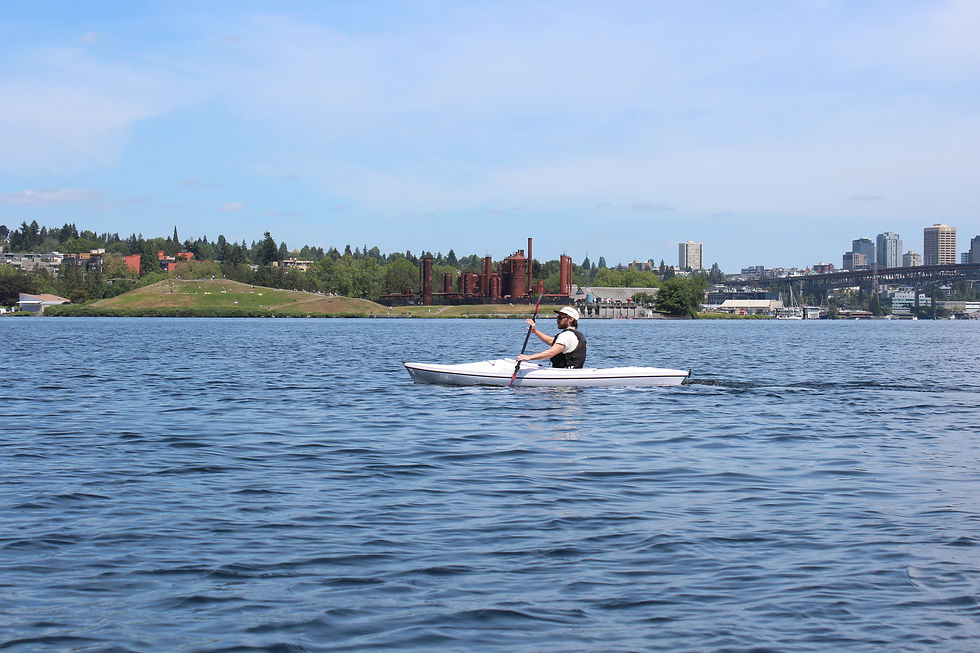
Can You Paddle Puget Sound in a Recreational Kayak?
Yes — but with caveats. Puget Sound has current, wind, and cold water. Afternoon wind can build quickly, and a 10-foot recreational kayak can become difficult to manage in a 15-knot headwind.
For occasional calm-day Sound paddling, the 12AR is workable. If the Sound is a regular part of your plan, a kayak with a rudder or skeg and a fitted cockpit for a spray skirt gives you more control and safety margin — that usually means the 12.10 at minimum, and more often the Delta 14.
Getting Your Kayak to the Water: Transport and Storage

For many first-time buyers, the deciding factor isn’t how the kayak paddles — it’s whether they can comfortably get it onto the car alone. Seattle has some specific wrinkles worth thinking through:
Solo loading: At 37 lbs, the 10AR is manageable for most people. The 12AR at 42 lbs is still solo-able but is slightly more difficult.
Apartment storage: The 10AR fits on many balconies and in storage units where a 12-footer won’t. Length matters more than weight here.
SUVs and minivans: The 10AR fits flat in the back of most full-size SUVs and minivans, which sidesteps the rack question entirely.
Delta’s thermoformed ABS construction also matters here — it’s lighter than rotomolded plastic across the whole lineup, which makes solo handling easier than comparable rec kayaks from other brands.

Cold Water: The Year-Round Reality
Puget Sound is cold for most of the year — around 50–55°F. Lake Union is even colder in the winter months (October-March). An open-cockpit rec kayak without a spray skirt means that if you capsize, you’re immediately immersed. Knowing how to rescue yourself is more important in Seattle than it is in warmer climates.
See our Cold Water Kayaking Guide for a full breakdown of what to wear and how to think about immersion risk in Pacific Northwest conditions.
What Else Do You Need?
Kayak purchase at NWOC includes 15% off accessories for six months. Here’s a handful of necessities to consider:
PFD (required by law, required for safety): A kayak-specific PFD you’ll actually wear. See our PFD Buying Guide for specific recommendations.
Paddle: Werner makes the paddles we stock and recommend. Length depends on your height and kayak width — we’ll help you dial that in.
Spray skirt (optional for calm water): The Seals Adventurer keeps water off your lap in light chop — size 2.5 deck for the 10AR, size 5.5 for the 12AR. Not required for flat water, but useful once you start pushing further.
Dry bag: For your phone, wallet, keys, and anything else you don’t want wet.
Bilge pump: Worth having in any kayak with a cockpit. Small and inexpensive.
Kayak purchase at NWOC includes 15% off accessories for six months — PFD, paddle, spray skirt, dry bags, and everything else.
Come Down to the Shop

The easiest way to choose is to paddle a couple kayaks side by side. NWOC offers free 20-minute demos of the full Delta lineup on Lake Union, plus hourly rentals if you want more time in a boat before deciding. We’re at 2100 Westlake Ave N — right on the water.
If you end up renting before you buy, we apply that rental time toward your purchase.
Questions? Call us at 206-281-9694 or stop by. We’ve been on this lake since 1981 and are happy to talk through what makes sense for how you want to paddle.
Kayak rentals on Lake Union
Free 20-minute demos of the full Delta lineup


This article offers a complete and well-articulated view of the topic. The tone is professional without being too formal or difficult to read. I found this text particularly useful for a project I am working on. It is not easy to find articles that treat this subject with this clarity.
This article offers a complete and well-articulated view of the topic. I learned a few new things that I had not considered before. I saved this text so I can reread it in the future when I need it. It is an article that demonstrates a good command of the subject.
The article is written with great care and attention to detail. I appreciated how the lesser-known aspects of the topic are addressed. I printed some parts to have them available while working. It is an article that demonstrates a good command of the subject.
The article is written competently and offers reliable information. I found the way the main points are highlighted useful. I found this article while looking for information on this topic and was satisfied. It is a good example of how one should write on complex subjects.
The article is written competently and offers reliable information. I found the way the main points are highlighted useful. I found it useful to reread some parts after the first complete reading. It is not common to find articles that manage to cover this topic so well.